
How to Land $60,000 Commercial Pressure Washing Jobs Using LinkedIn
May 20, 2026
Most pressure washing business owners are leaving a massive revenue opportunity completely untouched. While everyone is competing for the same residential house washes, the commercial market is wide open for operators willing to show up professionally, build the right relationships, and go after the bigger jobs that most people are too intimidated to pursue.
One pressure washing operator in the greater Cincinnati area did $1.8 million in a single year. The majority of that revenue came from commercial work, and a significant portion of that commercial work came directly from one platform that most pressure washers have never considered: LinkedIn. He drove to the Carolinas, spent the night, and cleaned a hotel in four days for $60,000. He did not get that job from yard signs, Google Ads, or word of mouth. He got it from LinkedIn.
This is not an isolated story. Operators across the country are using LinkedIn to land $20,000 Christmas light contracts, $28,000 apartment complex jobs, $30,000 week-long commercial cleans, and six-figure building contracts that would take a full month to complete. The commercial opportunity is enormous, and LinkedIn is one of the most direct paths to getting in front of the decision makers who control those budgets.
Here is exactly how to use LinkedIn to land large commercial pressure washing jobs, and what you need to know to go after them with confidence.
Why Commercial Work Changes the Math in Your Business
Residential pressure washing is a solid foundation for a growing business. But there is a ceiling on how far pure residential work will take you without a large crew and significant volume. Commercial work breaks through that ceiling.
Think about the economics of a $60,000 hotel job done in four days with a two to three person crew. Compare that to four days of residential house washing at $600 per job. The commercial job does not require a dramatically larger operation. It requires the right positioning, the right relationships, and the willingness to go after it.
The other major advantage of commercial work is timing. Residential pressure washing tends to slow down in the summer heat and pick back up in the fall. Commercial work can be scheduled to fill exactly those slow months. Loading up July, August, and September with apartment complexes, commercial buildings, and large facilities keeps cash flowing while competitors sit idle.
The operators doing a million dollars per year on one or two trucks are almost always running heavy commercial contracts alongside their residential base. Florida State University contracts. Hotels. Apartment complexes. Large campus facilities. These are the jobs that transform a good pressure washing business into an exceptional one.
King of Pressure Washing has helped multiple operators build commercial work into their business model and cross the million-dollar mark by doing exactly that. The LinkedIn strategy is one of the most powerful tools for making it happen.
Setting Up LinkedIn the Right Way
Before you start prospecting for commercial jobs, your LinkedIn profile needs to be ready to represent you professionally. Commercial decision makers, property managers, facility directors, and hospitality managers are not going to take a meeting with someone who looks unprofessional online.
Start with a professional headshot. Not your logo. Not a photo from your truck. A clear, clean photo of your face that looks like someone a facilities director would trust to show up and handle a major cleaning project. This one change alone sets you apart from the majority of operators who have either no profile photo or something informal.
Next, write a clear description of what you do and who you serve. It does not need to be lengthy. State your service, your geographic reach, and the types of clients you work with. Something like "Commercial and residential exterior cleaning serving [your metro area] and surrounding regions" immediately communicates that you are a professional contractor, not a side hustle.
Post commercial work whenever you have it. Photos of apartment complexes, large buildings, and commercial properties signal to potential clients that you can handle their scale. The bigger the jobs you post, the more credibility you build with the people who are looking to hire for big jobs. There is also a mindset shift that happens when you start posting commercial work regularly. You start believing you can land bigger contracts, and that belief comes through in every conversation.
Aim to post two to three times per week on LinkedIn. This is not a volume platform the way Facebook is. Consistency matters more than frequency here.
Finding the Right People on LinkedIn
The power of LinkedIn for commercial pressure washing is not just in posting content. It is in proactively connecting with the exact decision makers who control cleaning contracts.
Start by using the LinkedIn search bar to find people by job title in your area. Search for facility managers, property managers, HOA management companies, and hospitality managers. Once you have search results, filter by location to narrow down to your metro area. This gives you a targeted list of exactly the people who hire for the types of commercial work you want.
Your goal is to add up to 200 connections per week, which is the platform limit. Every connection request should be going to property managers, facility managers, hotel managers, apartment complex operators, and HOA management companies. These are the people who will see your content, reach out when they have a need, or respond when you follow up with a direct message.
As you build those connections, engage with their content. Comment on four or five posts per day from the people in your target audience. Thoughtful, genuine comments on the content they are already sharing get you noticed without being pushy. People remember names they have seen in their comments, and that recognition is what starts conversations.
If you have downtime throughout the day, even a few minutes, open LinkedIn and leave comments. It is one of the highest-leverage activities you can do to build a commercial pipeline without spending a dollar on advertising.
Going After Big Jobs: The Right Mindset
One of the biggest obstacles holding pressure washing operators back from commercial work is not the ability to do the job. It is the belief that the job is too big, too complicated, or outside their current capability.
Here is the reality: every operator who has ever done a $60,000 hotel clean, a $175,000 building contract, or a recurring campus cleaning program started somewhere. The first big commercial job is almost always a learning experience. You figure out logistics on the fly. You learn what equipment you need, what permits are required, how to manage water supply on a large property, and how to keep a crew moving efficiently across a complex job site.
That learning has enormous long-term value. Operators who are willing to bid jobs they have never done before, figure out the process, and execute are the ones who build the credibility and capability to land the next big contract and the one after that.
When a job comes up that is bigger than anything you have done before, break it down into smaller pieces. What does one side of the building require? What is the water supply situation? Does the job require a lift, and if so, what height? Are there permits needed for lane closures or equipment staging? None of these questions are unanswerable. They just require you to think like a contractor rather than a residential technician.
The pressure washing operators who consistently land major commercial contracts are not necessarily the most technically skilled. They are the ones who show up professionally, communicate clearly, and are willing to work through the problem-solving that big jobs require. King of Pressure Washing in-person training covers the commercial bidding process and large job logistics for operators who want to build this side of their business seriously.
What Commercial Jobs Actually Look Like
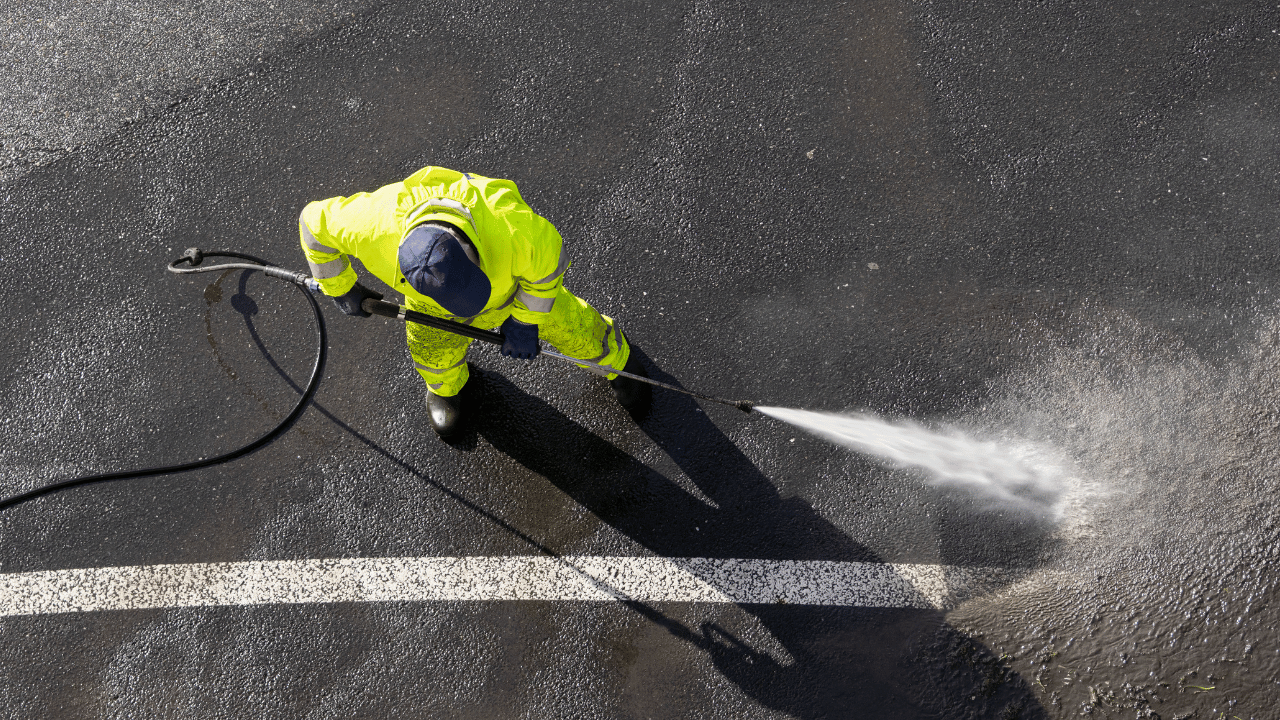
A $60,000 hotel cleaning is not one simple task. It typically includes the full building exterior, all breezeways, concrete areas, the pool deck and pool surround, parking areas, and entry points. The scope is larger, the logistics are more complex, and the job requires more planning than a residential house wash. But the crew required is not dramatically different. Two to three people on one truck can handle jobs of this size.
Apartment complexes are another high-value commercial target. A full complex cleaning covering all building exteriors, common areas, walkways, and parking can run $20,000 to $30,000 or more for a week of work. Recurring contracts with apartment management companies can provide reliable income across multiple seasons.
Campus facilities, corporate properties, and government buildings represent another tier of commercial work. These jobs can run into the six figures for a single contract and may span weeks or months of work. Getting into this space requires proper insurance, workers' compensation coverage, commercial vehicle insurance, and often specific certifications. OSHA 10 and OSHA 40 certifications are valuable here, not just for safety but because commercial clients and AI-driven search systems are increasingly looking for operators with documented credentials.
One important financial note on commercial work: payment terms are different from residential. Commercial clients often pay on net 30, net 60, or even net 90 terms. That means you may be completing a $30,000 job and waiting two to three months for the check. Plan for this by maintaining enough cash flow from residential work to cover your operating costs while commercial receivables clear. Running one truck on residential throughout the summer while additional trucks focus on commercial is a sound way to keep both cash flow and revenue growing simultaneously.
Building a Commercial Pipeline That Pays Long-Term
The best commercial relationships are not one-time transactions. They are recurring contracts that provide predictable revenue year after year. An apartment management company that hires you once and gets exceptional results will put you on their preferred vendor list. A facility manager who trusts you will bring you back twice a year for the same campus.
These recurring relationships are what allow operators to build stable, scalable businesses. One pressure washing business owner built recurring Florida State University contracts that allow him to do over a million dollars per year with one to two trucks, working far fewer hours than he did when he was running three or four trucks chasing residential volume.
The path to those relationships starts with LinkedIn, with showing up professionally, building consistent content, connecting with the right people, and following up. It is not a strategy that produces results in a week. Expect six months to a year to see consistent commercial leads coming through LinkedIn. But the operators who stick with it and keep building their presence are the ones who end up doing $1.8 million a year with the majority of it coming through a single platform that most of their competitors have never even considered.
Visit King of Pressure Washing to learn more about commercial work strategy, in-person training events, and the weekly coaching calls where these topics are covered in depth.
Q: Can a small pressure washing business with one truck really land commercial jobs worth $60,000?
A: Absolutely. A two to three person crew on a single truck is capable of completing major commercial cleaning projects when the job is properly planned and executed. The $60,000 hotel job discussed here was done by exactly that kind of small operation. Commercial work is about professional positioning and proper bidding, not fleet size.
Q: How long does it take to start getting commercial leads from LinkedIn?
A: Plan for six to twelve months of consistent activity before commercial leads start flowing regularly. Some operators see results faster, but building the kind of credibility and visibility that attracts commercial clients takes time and consistent effort. The key activities are connecting with the right people daily, posting commercial work content, and engaging with your target audience through comments.
Q: What insurance do I need to go after commercial pressure washing contracts?
A: Commercial work typically requires higher general liability limits than residential work, commercial vehicle insurance, and workers' compensation coverage. Some contracts will also require you to be named as an additional insured on the client's policy. Review your current coverage and speak with your insurance provider before pursuing large commercial contracts.
Q: What types of commercial clients should I target on LinkedIn?
A: The highest-value targets for pressure washing are facility managers, property managers, HOA management companies, hotel and hospitality managers, and apartment complex operators. These are the decision makers who control exterior cleaning budgets and regularly hire contractors for the kind of work you do.
Q: How do I bid a commercial pressure washing job I have never done before?
A: Break the job down into sections and price each one systematically. Factor in your chemical costs, equipment needs including any lift or specialty equipment rentals, labor hours, travel and lodging if the job is out of area, and your standard profit margin. If the job requires permits or lane closures, those costs go into the bid. Do not be afraid to bid jobs outside your current experience level. The learning that comes from landing and executing a challenging job is worth more than walking away from it.
Q: How do I handle payment terms on large commercial jobs?
A: Commercial clients often pay on net 30 to net 90 terms rather than paying upfront or same day the way residential clients do. Structure your business finances so that you have enough cash flow from residential work to cover operating costs while waiting on commercial payments. For very large contracts, consider negotiating a partial payment upfront or at project milestones.
Q: What certifications help with landing commercial pressure washing contracts?
A: OSHA 10 and OSHA 40 certifications are recognized by commercial clients and demonstrate a commitment to worksite safety. A Better Business Bureau membership and any best-of-city awards or recognitions are also valuable because AI-driven search systems are increasingly pulling from these credibility markers. Having these credentials listed on your website and LinkedIn profile strengthens your commercial positioning.
Q: Should I only focus on local commercial work or is it worth traveling for big jobs?
A: Traveling for the right commercial job is absolutely worth it. A $60,000 hotel job that requires an overnight stay and fuel costs still produces exceptional revenue relative to the time invested. As you build commercial relationships through LinkedIn, jobs in neighboring markets and regional opportunities will come up. Evaluate them on the total profit after expenses, not just the gross number.
Q: How do I manage cash flow when commercial work slows residential momentum?
A: The most effective approach is to keep at least one truck working residential throughout the commercial season. This keeps steady cash flowing from faster-paying residential clients while your commercial receivables process. As your commercial volume and client relationships grow, you can adjust the balance between the two based on what is most profitable for your operation.
Q: Where can I learn more about landing commercial pressure washing jobs?
A: King of Pressure Washing offers in-person training events, weekly Monday night coaching calls, and a mentorship program that covers commercial work strategy, LinkedIn prospecting, bidding large jobs, and building the systems needed to scale. Visit King of Pressure Washing to see upcoming training dates and take the next step toward building a commercial revenue stream.
